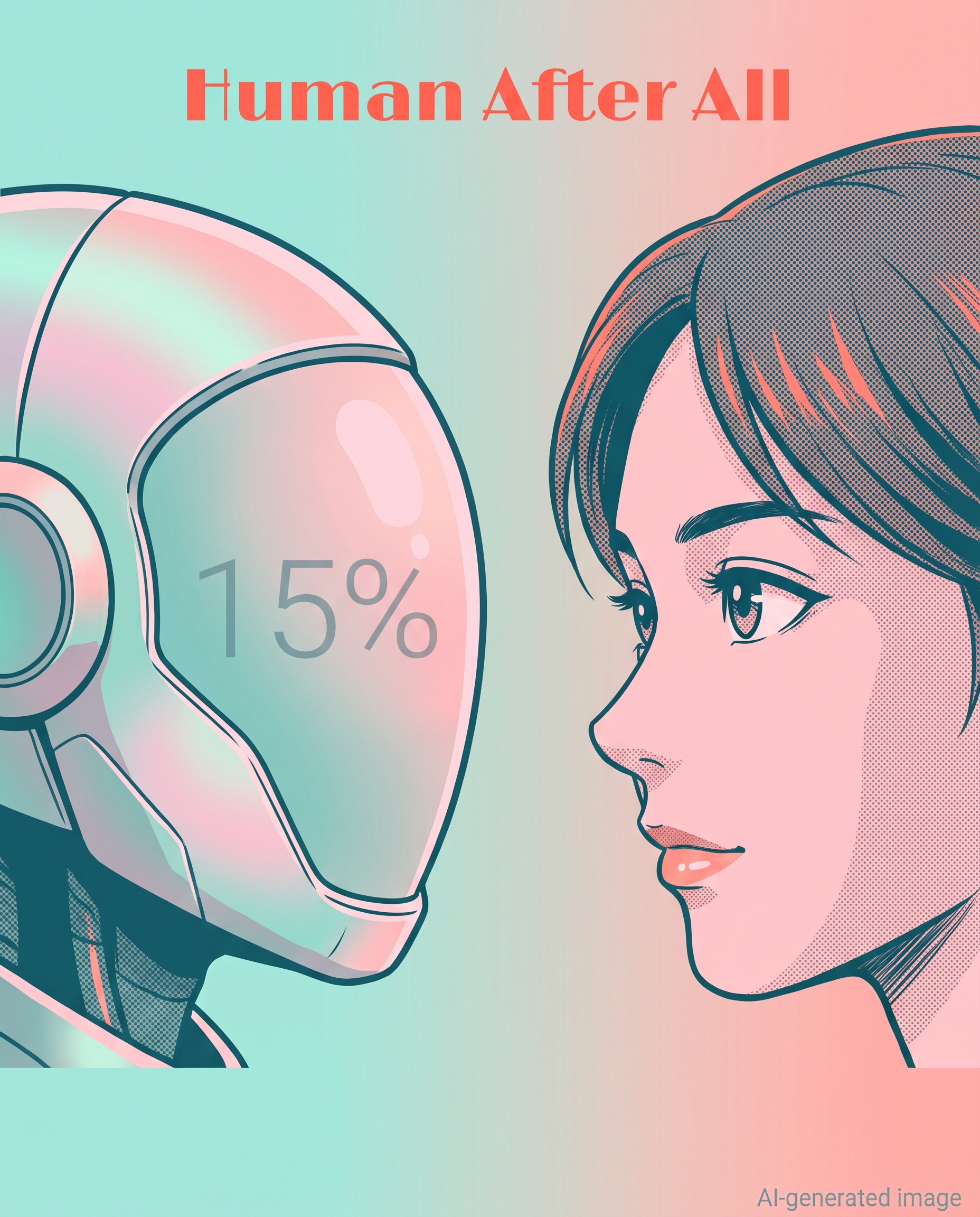
15%. That’s how many French people trust AI assistants like ChatGPT, Gemini or DeepSeek, according to the Ipsos trust index published on 17 September. The headlines loved that politicians did worse — 8% for politicians, 10% for government ministers. What struck me is how low it is for tools we use every single day.
of French people trust AI assistants like ChatGPT or Gemini (Ipsos, September 2026)
In August, Dario Amodei, CEO of Anthropic (the company behind Claude), put it bluntly on X: the backlash against AI is “fundamentally a crisis of trust.” Ordinary people, he wrote, don’t trust companies, governments or the tech industry, and always suspect “we are cooking up some new way to screw them over.”
A month later, on 15 September, his rival Sam Altman, CEO of OpenAI (the company behind ChatGPT), took the stage in San Francisco. He agreed the world was right to be afraid — then asked everyone to trust that OpenAI would “do the right thing because it’s the right thing.” So: you’re right to be scared, but trust us. It’s a bit like opening the Ark of the Covenant and promising everyone it’ll be fine. Indiana Jones fans know how that ends.
Amodei’s diagnosis is spot on. But the industry built a lot of this distrust itself. For two years, the big American AI companies have been swinging between two scripts: AI will cure cancer, AI might slip out of our control — sometimes in the same interview. In the US, people are pushing back: 142 protests against data centres in 42 states in July alone. Then on 14 September, Donald Trump weighed in: the only guardrail AI needs is a “STRONG AND SMART” president. When those who build the technology flip between promise and threat, and those who could regulate it won’t, the public does what it always does — it stops trusting anyone.
It doesn’t stay in the polls. Your customers wonder whether a person or a machine handled their file. Your employees watch new tools arrive without knowing what they’ll mean for their jobs, or what happens to their data. And your big clients are starting to add AI to their supplier questionnaires, the way they did with climate a few years back.
The big American players won’t help you here. You can’t borrow their credibility — they’re running low themselves. You’ll have to build your own. The good news: the same survey shows how. The French trust doctors (70%), scientists (63%) and teachers (54%) — three jobs where someone answers for their decisions, follows known rules and can be checked. Trust goes to people who answer for what they do. A company can do the same with AI.
Sounds obvious. It isn’t everywhere. A customer who finds out afterwards they were chatting with a bot feels tricked, even if the answer was good. It’s also the law now: since 2 August 2026, the EU AI Act requires you to tell people when they’re interacting with an AI system. Plenty of companies heard the AI Act had been delayed. This part wasn’t.
For decisions that really matter — a hire, a loan, a rejected application — a person has to be able to review, correct and own the outcome, with the authority to overrule the machine. In practice, “keeping humans at the centre” means a name, a role and a written procedure. If you can’t point to those for each sensitive use, the slogan won’t last long.
How many AI tools are running in your company? Who picked them? What data goes through them? Start with an inventory. Then measure: team training, usage rules, checks on outputs, security, impact. Only then talk about it — with evidence.
RAIM Level is a responsible AI maturity rating for organisations. An independent measure, based on evidence. It covers five pillars, from people and society to environmental impact, including governance, transparency and security. You get a RAIM Score®, a maturity level (from Foundation to Leader) and an action plan to move up. A pilot programme starts in October with European companies — the assessment is free during the pilot.
Join the pilot programme